
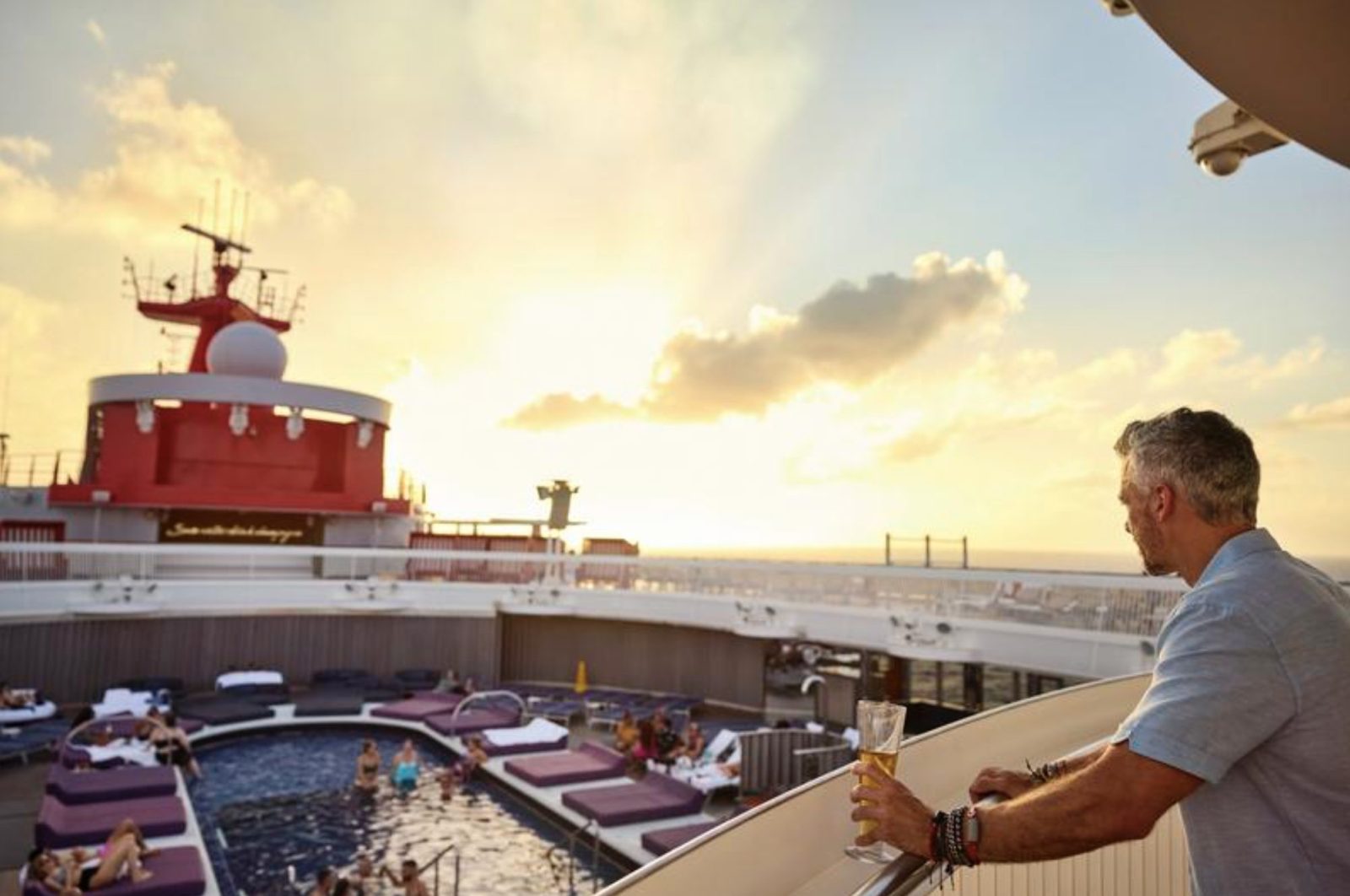
Choosing the right cabin side can make or break your virgin voyages transatlantic sun experience. On an eastbound Atlantic crossing — whether departing from Miami or New York City — sunlight hits the ship in predictable patterns determined by your heading and the season. Understanding exactly which side of the ship gets morning light, afternoon warmth, and golden sunset glow helps you book the perfect Sea Terrace, Sea View, or even RockStar suite for your voyage to Barcelona or beyond. This guide covers everything you need to know about cabin placement, sun angles, and practical tips for maximizing your time in the light on Scarlet Lady, Valiant Lady, Resilient Lady, or Brilliant Lady.
Every spring transatlantic voyage from the United States to Europe follows the same basic geometry. The ship sails east or east-northeast across the Atlantic Ocean in the Northern Hemisphere. During spring months — typically March through May — the sun arcs across the southern sky at a relatively consistent angle. Because the ship maintains a broadly eastward heading for five to eight consecutive sea days, sunlight exposure on port and starboard sides remains remarkably stable throughout the crossing.
This predictability is what makes cabin-side selection so valuable on a transatlantic voyage compared to an itinerary with frequent port stops. On a Caribbean holiday cruise, the ship changes direction constantly between islands. On a transatlantic crossing, you get day after day of the same sun pattern — and the side you choose determines whether you wake up in golden light or spend your afternoons in warm sunshine on your balcony.
Both Scarlet Lady and Resilient Lady spring transatlantic voyages share these same sun dynamics. The departure city — Miami or NYC — shifts your early route slightly, but once you are out on open ocean heading east, the sun behaves identically regardless of which port you left from.
If waking up to warm morning light streaming through your cabin is a priority, starboard is the side to book. When the ship sails east, the sunrise appears ahead of the bow and slightly to the right. That means starboard cabins — the right side of the ship when facing forward — catch the earliest and strongest morning sun from roughly 6:00 a.m. through late morning.
Starboard morning sun is especially noticeable on Sea Terrace cabins, where your private balcony faces directly outward. Imagine having coffee on your terrace as the Atlantic sunrise fills your space with warm orange light. On sea days — and a transatlantic crossing has many — this becomes a daily ritual that passengers rave about.
For the most unobstructed sunrise views, aim for mid-ship starboard cabins on decks 10 through 14. Cabins too far forward may have partial views blocked by the superstructure, while aft cabins get beautiful wake views but less direct sunrise angle.
Keep in mind that starboard cabins will be shadier in the afternoon. The starboard side feels noticeably cooler once the sun passes overhead to the south and west. This can actually be a benefit if you prefer a shaded balcony during the warmest part of the day.
Port side — the left side of the ship when facing forward — is where the real warmth lives on an eastbound transatlantic crossing. In the Northern Hemisphere during spring, the sun tracks across the southern sky. When your ship heads east, south is to your left. That puts the port side in direct sunlight from roughly late morning through sunset.
This makes port cabins the popular choice for sailors who want warm afternoons on their balcony. The virgin voyages transatlantic sun on the port side peaks during the early-to-mid afternoon, creating ideal conditions for sunbathing, reading, or simply enjoying the vast open Atlantic from your private terrace. Many experienced transatlantic sailors specifically request port-side Sea Terrace cabins for this reason.
Port side also wins for sunsets. Because the ship sails east, the sun sets behind and to the left of the vessel. Port-side balconies get stunning golden-hour light in the evenings, typically from around 6:00 p.m. until the sun dips below the horizon. On clear Atlantic evenings, sunset from a port-side Sea Terrace is one of the most memorable experiences on any Virgin Voyages ship.
The trade-off is mornings. Port-side cabins are shaded during sunrise and the early morning hours. If you are not an early riser, this is actually ideal — your cabin stays darker and cooler, letting you sleep in without bright light waking you at dawn. For couples where one person loves sunrise and the other prefers sleeping in, this dynamic matters when choosing sides.
Your cabin type affects how much virgin voyages transatlantic sun you actually experience. Here is how each category plays into the equation:
Sea Terrace cabins offer the most direct sun impact because of the private balcony. Whether you book a Limited View Sea Terrace or a standard Sea Terrace, you get outdoor space that faces directly outward from the ship. Sun side selection matters most here because you will physically feel the difference between a sun-facing and shade-facing balcony every single day.
Sea View cabins have a window rather than a balcony. You will still notice the sunlight patterns — a south-facing Sea View cabin on port side will be noticeably brighter — but the effect is less dramatic since you cannot sit outside.
Insider cabins have no window or balcony, so cabin side is irrelevant for sun exposure. If sun matters to you but budget is tight, consider prioritizing your time at Redemption Spa or the pool deck instead, where everyone gets equal access to sunlight regardless of cabin placement.
RockStar Suites — particularly the Massive Suite and Gorgeous Suite — feature large terraces or balconies that amplify whatever sun your side of the ship receives. A port-side Gorgeous Suite on a transatlantic crossing is arguably one of the best afternoon sun experiences on any cruise ship sailing today.
Higher decks generally receive more direct sun and less shadow from the ship’s structure. Decks 12 through 15 tend to have the least obstruction. Lower Sea Terrace decks like 8 and 9 can occasionally get shadow from lifeboats or structural overhangs depending on the ship — Brilliant Lady refined some of these layouts compared to earlier ships. When booking, check the Virgin Voyages deck plans to visualize exactly where your cabin sits relative to potential obstructions.
Here is a straightforward breakdown to help you decide which side fits your preferences:
Starboard (right side facing forward)
Port (left side facing forward)
Most transatlantic veterans prefer port side because it delivers more total sun hours and coveted sunset views. If you value morning light and a cooler afternoon cabin, starboard is the better pick.
Securing your preferred cabin side takes a bit of planning. Here are strategies that work:
Book early for the best selection. Sun-side preferences are well known among experienced transatlantic sailors, and popular port-side Sea Terrace cabins on spring crossings sell faster than you might expect. The earlier you book through the booking process, the more cabin options you will have. A Serious Sailors travel advisor can help you identify exactly which cabin numbers sit on which side of the ship.
Use deck plans to check for obstructions. Not all cabins on the same side offer identical views. Some may be partially blocked by lifeboats, structural elements, or overhanging decks. Cross-reference your cabin number with cabins to avoid lists to ensure you are not getting a spot with a compromised sightline.
Consider the Level Upgrade Bidding system. If you booked a cabin on the side you did not prefer, an upgrade bid might move you to a better category on the opposite side. This is not guaranteed, but it is one more lever to pull.
Think about your daily routine. If you are a solo sailor who spends mornings at the gym and afternoons on your balcony, port side is the clear winner. If you are an early riser who heads to breakfast reservations at The Wake and spends afternoons exploring the ship, starboard gives you the sunrise wake-up call without sacrificing much.
Pack accordingly. Regardless of which side you choose, bring along solid sunscreen and sunglasses for balcony time. The Atlantic sun at sea — especially as you approach southern European latitudes — is stronger than many sailors expect. Check the transatlantic weather guide for what to expect on your specific route and time of year.
Everything reverses on a westbound voyage. If you are sailing from Barcelona back to Miami or NYC, the ship heads west. Starboard becomes the afternoon and sunset side, while port gets the morning sun. If you are booking a round-trip transatlantic — outbound and return — and sun exposure matters to you, consider booking opposite sides for each leg. The transatlantic survival guide covers more about planning for long crossings in both directions.
Also note that virgin voyages transatlantic sun patterns shift slightly by month. In early spring the sun sits lower in the sky, casting longer shadows and providing gentler warmth. By late May and into summer repositioning crossings, the sun angle is higher, delivering more intense midday heat. This seasonal difference is subtle but noticeable over a week at sea.
Even if you end up on the shaded side for your preferred time of day, every Virgin Voyages ship has plenty of public sun-soaked spaces. The pool deck, Athletic Club outdoor areas, and Richard’s Rooftop for RockStar guests all face upward and receive full sun regardless of your cabin placement. On sea days — and transatlantic crossings typically have five to eight of them — you will have ample time to soak up virgin voyages transatlantic sun from common areas.
Some sailors intentionally book a shaded cabin side to keep their room cool and dark for sleeping, then spend daytime hours in the sun at the pool or planning their post-voyage flights from a sunny lounge. It is a valid strategy, especially if you run warm or prefer blackout-level sleeping conditions. Staying connected during sea days is easy with the onboard WiFi options, so you can research and book from anywhere on the ship.
Your ideal cabin type depends on how you balance sun exposure, budget, and other priorities. The sun-side question is one important factor among several when booking a transatlantic voyage — but for many sailors, it is the factor that determines whether their crossing feels bright and warm or cool and shaded.
Port side receives the most total hours of direct sun. Because the sun arcs across the southern sky in spring and the ship heads east, port-side cabins get direct light from late morning through sunset. Starboard gets the sunrise but is shaded for the majority of the day.
Not significantly. Whether you depart from Miami or NYC, the ship heads east across the Atlantic and the same sun dynamics apply. The early portion of the route differs slightly, but once on open ocean the sun exposure is identical on both itineraries.
Yes. Even at northern latitudes, the combination of direct sun and reflection off the water creates significant UV exposure. As the ship approaches southern European latitudes, the sun intensity increases noticeably. Always apply sunscreen for extended balcony time during sea days.
Yes. When selecting your cabin during booking, the deck plan shows exactly which side each cabin sits on. Odd-numbered cabins are typically on one side and even-numbered on the other. A Serious Sailors travel advisor can help you identify specific cabin numbers on your preferred side for any Virgin Voyages ship.
On an eastbound Virgin Voyages transatlantic crossing, port side delivers the most total sun — warm afternoons and stunning sunsets from your balcony. Starboard wins for sunrise lovers who want morning light streaming into their cabin. Both sides have genuine advantages, and neither is a wrong choice. The key is matching your side selection to your daily habits and preferences. Whether you book a spring transatlantic on Virgin Voyages for the sunrise ritual or the sunset glow, understanding virgin voyages transatlantic sun patterns ensures you will spend your sea days exactly the way you want.
