

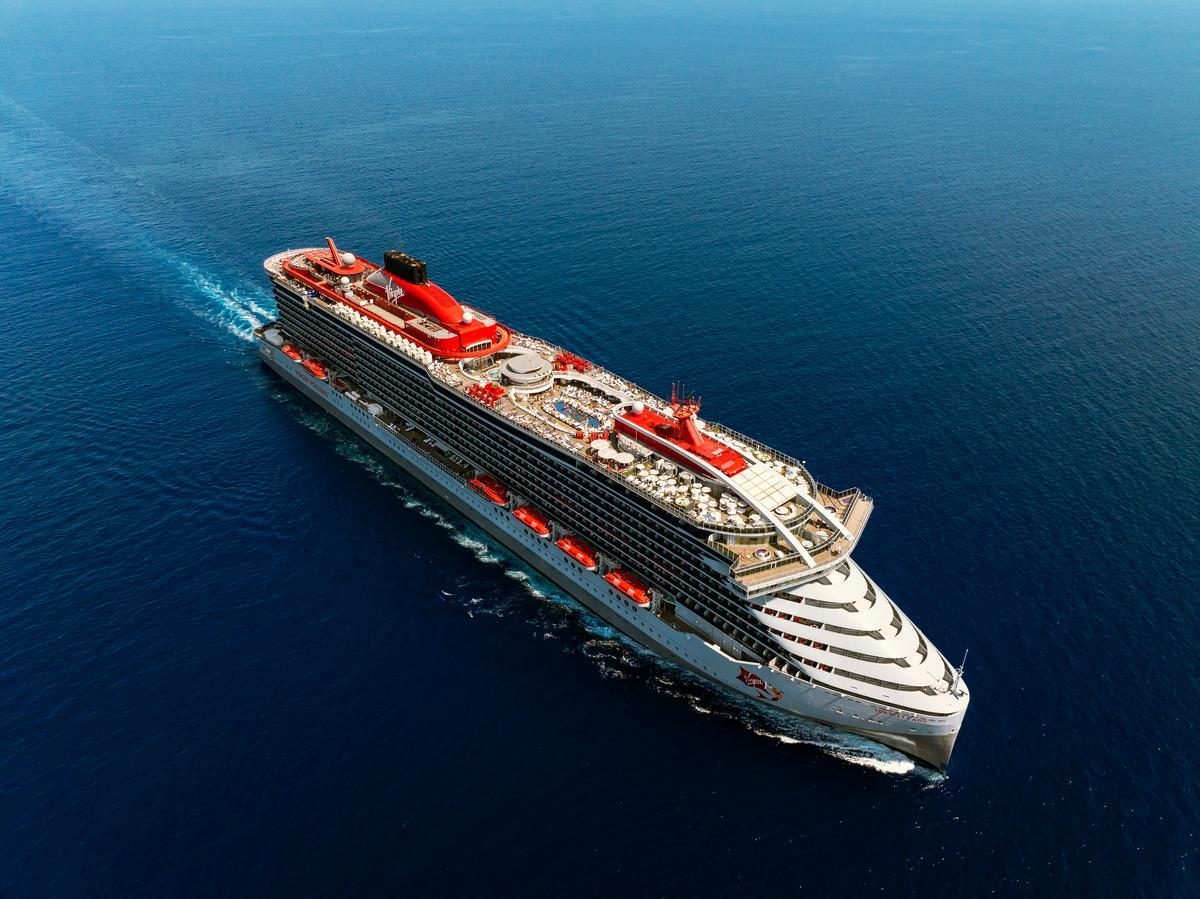
A Virgin Voyages transatlantic cruise is one of the most rewarding ways to cross the Atlantic — 12 to 15 nights of open ocean, zero kids, included dining at every restaurant, and a ship designed for adults who actually want to unplug. These one-way repositioning voyages connect North America to Europe (or the reverse) each spring and fall, with consecutive sea days that give you time to settle into a rhythm most 7-night Caribbean sailings can’t match. Whether you’re eyeing a 2026 or 2027 crossing, this guide from Serious Sailors® covers every sailing, every route, and everything you need to know before booking.
These aren’t standard cruise itineraries with a port stop every morning. A transatlantic crossing on Virgin Voyages means five to eight consecutive sea days on some routes — long stretches of open water where the ship becomes the destination. That sounds intimidating if you’ve never done it. In practice, it’s the opposite. The pace slows down, the restaurants feel less rushed, and you actually get to explore every corner of the ship without competing with port-day crowds.
Virgin Voyages also adds programming specifically for longer voyages: guest speaker sessions, Festival Stage performances, bridge tours, specialty daily dishes, and a weekly Thermal Spa pass. These extras don’t appear on standard 5- or 7-night sailings. They exist because the ship has time to offer them — and because Sailors on transatlantic crossings tend to be the type who appreciate them. For a detailed look at how to make the most of all those sea days, check out our transatlantic crossing survival guide.
Virgin Voyages currently has 6 transatlantic crossings on the books for 2026 and 2027, including the 2026 Aug-Sept Back-to-back Nordic Transatlantic from England to New York City via Scotland, Holland, Iceland, Greenland, Newfoundland & Nova Scotia. Here’s every confirmed sailing at a glance:
| Sailing | Ship | Dates | Nights |
|---|---|---|---|
| English Elegance to Idyllic Iceland | Valiant Lady | Aug 27 – Sep 6, 2026 | 10 |
| Iceland, Greenland, Canada & NYC | Valiant Lady | Sep 6 – Sep 19, 2026 | 13 |
| Spanish Isles & Transatlantic Miles | Scarlet Lady | Oct 11 – Oct 25, 2026 | 14 |
| Transatlantic Miami to Morocco & Spain | Scarlet Lady | Apr 24 – May 8, 2027 | 14 |
| Spain & Morocco Transatlantic | Resilient Lady | May 2 – May 16, 2027 | 14 |
| Barcelona to Miami Transatlantic | Resilient Lady | Oct 24 – Nov 7, 2027 | 14 |
| Barcelona to San Juan Transatlantic | Scarlet Lady | Oct 31 – Nov 12, 2027 | 12 |
The 12-night Scarlet Lady transatlantic from Barcelona to San Juan includes ports like Tangier and a maiden call in Lanzarote. The 14-night Resilient Lady crossing from Barcelona to Miami follows a similar westbound pattern. If you’re deciding between the two 2027 spring crossings — both departing Miami just days apart — we break down exactly how they compare in our Scarlet Lady vs Resilient Lady transatlantic comparison.
Each crossing follows a unique route with different port highlights. The eastbound spring voyages tend to end in Barcelona, while the fall westbound sailings return ships to Miami, San Juan, or New York for Caribbean season. Here’s how each route breaks down.
Eight straight sea days from Miami before reaching Gran Canaria, then Casablanca, and the Spanish coast. The 2027 version swaps a stop for Valencia instead of Alicante, but the rhythm is the same — a long open-ocean stretch followed by a rewarding cluster of Mediterranean and North African ports.
The westbound crossing reverses the pattern: Casablanca and the Canary Islands early on, then eight consecutive sea days back to Miami. This sailing — Spanish Isles & Transatlantic Miles — is ideal for Sailors who want the European ports first and the deep-ocean experience as the finale.
This is the outlier — and it’s spectacular. Isafjordur, Prince Christian Sound scenic cruising, Qaqortoq, Nuuk, St. John’s in Newfoundland, and Halifax before arriving in New York. At 13 nights, it’s the shortest transatlantic on the schedule, but the itinerary is unlike anything else Virgin Voyages offers. Arctic landscapes, sub-Arctic ports, and a North Atlantic crossing with some of the most dramatic scenery at sea.
Eight sea days followed by Santa Cruz de Tenerife, Tangier, Málaga, and Barcelona. A solid eastbound route with a mix of Canary Island and Moroccan stops that’s structurally similar to the Scarlet Lady crossings but on a different ship — which means different entertainment and shows.
This 12-night crossing departs Barcelona on October 31, 2027, with stops including Tangier and the Canary Islands, including a maiden call in Lanzarote. The voyage ends in San Juan rather than Miami, offering a different Caribbean arrival point.
Spring crossings (April–May) move eastbound toward Europe, with generally mild weather that improves as you approach the Mediterranean. Fall crossings (September–November) head westbound, returning ships to the Americas. The September Reykjavik sailing is the wildcard — cooler temperatures and potentially rougher North Atlantic conditions, but the scenery is in a different league entirely.
Weather on any ocean crossing is unpredictable, and sea conditions vary by route and month. We built an entire month-by-month transatlantic weather guide that covers what to expect for each sailing window — temperature ranges, sea state probabilities, and what to pack.
Pro Tip: If sun exposure matters to you — and on a voyage with 5+ sea days, it will — cabin placement matters more than usual. Eastbound crossings and westbound crossings expose different sides of the ship to afternoon sun. Our guide to which side of the ship gets more sun on a transatlantic walks through exactly how this works for each route direction.
Not every Sailor wants eight straight sea days. That’s fine. But the Sailors who love transatlantic crossings tend to love them intensely. Once you do one, you’ll want to do them every year.
These voyages are ideal for Sailors who want to slow down — who want time to eat at every restaurant multiple times, take an afternoon nap without guilt, try every show, and actually read a book on the Sea Terrace. They’re also a smart option for solo Sailors, who benefit from the extra time to meet people through the ship’s clubs, groups, and game sessions that run daily on longer voyages. Couples celebrating milestones and anyone who craves genuine unplugged time will thrive.
They’re less ideal for Sailors who need constant port stimulation or who get restless without a packed daily agenda. Be honest with yourself about your travel style before committing to 14 nights.
Every transatlantic sailing includes the same core Virgin Voyages inclusions: all restaurants, basic beverages, group fitness classes, and WiFi. Longer voyages add the weekly Thermal Spa pass, specialty sea-day menu items, and the expanded entertainment programming mentioned above.
For a 14-night crossing, the Bar Tab math changes compared to a short sailing. Even moderate drinkers rack up a meaningful tab over two weeks, so prepaying can save real money. Review the numbers before you sail.
Booking Tip: On a transatlantic, you’ll have time to eat at every restaurant multiple times. Make your dining reservations early — especially for The Wake and Test Kitchen on the first few sea days, when everyone’s competing for the same slots. Port days are your secret weapon for last-minute availability, since many Sailors eat ashore.
One practical note: WiFi at sea works for browsing, messaging, and email, but speeds can vary mid-ocean. Video calls may struggle during the longest open-water stretches. Plan accordingly if you need to work remotely.
Transatlantic voyages are repositioning sailings, and that often means more aggressive pricing than standard Caribbean or Mediterranean itineraries. Virgin Voyages needs to move these ships across the ocean regardless — Sailors filling the cabins are a bonus, and the fares frequently reflect that.
Deposits are 20% of the voyage fare and are due at booking. Final payment is due 120 days before departure — or in full at booking if you’re inside that window. Virgin Voyages accepts Visa, MasterCard, Discover, American Express, Apple Pay, and PayPal. U.S. and Canadian residents also have access to Flex Pay financing, which covers the voyage fare plus add-ons like Shore Things.
Pro Tip: Book early, then watch for price drops. If your fare class allows it, you can reprice your booking before final payment. This is one of the smartest strategies for transatlantic sailings specifically, since these fares tend to fluctuate more than standard itineraries. Your First Mate at Serious Sailors can monitor this for you.
Fare class matters on a longer voyage. Essential and Premium fares provide date-change flexibility and Future Voyage Credit options if plans shift. Lock It In rates offer the deepest discounts but are completely non-refundable and non-changeable — a meaningful commitment on a 14-night sailing with flights to coordinate. Understand the tradeoff before you lock in.
Because every transatlantic is a one-way voyage, you’ll need a one-way flight on at least one end. This is the single biggest logistical question Sailors ask about — and the area where the most money can be saved or wasted.
One-way transatlantic flights are notoriously expensive if you search the wrong way. We wrote an entire guide on how to find cheap one-way transatlantic flights that covers positioning strategies, budget carriers, and the “hidden city” trick that can save hundreds. Read it before you book airfare.
For Sailors ending in Barcelona, the ship arrives at 6:30 AM — allow up to an hour for the gangway to open. If you’re flying home the same day, book an afternoon or evening flight to give yourself margin. All itinerary details, including arrival and departure times, are subject to change.
On a 7-night Caribbean sailing, cabin choice is important. On a 14-night transatlantic, it’s critical. You’ll spend significantly more time in your cabin on sea days, and the difference between an Insider and a Sea Terrace is felt every single day.
A Sea Terrace with a balcony gives you a private outdoor space that becomes your morning coffee ritual. For Sailors who can stretch the budget, a RockStar Suite adds meaningful perks for a longer voyage — priority restaurant access, the Richard’s Rooftop bar, and a dedicated concierge. Our cabin recommendations by traveler type can help you narrow it down based on how you actually travel.
Future Voyage Credits can be applied to a new sailing up to one year after the original voyage date. They’re issued per Sailor and cannot be transferred to someone else.
Yes. Flexpay financing is available for U.S. and Canadian residents and covers the full voyage fare plus add-ons like Shore Things and spa treatments. It’s a practical option for spreading the cost of a 14-night sailing.
April and May offer the mildest weather for eastbound crossings to Europe, with warming temperatures as you approach the Mediterranean. September and October westbound sailings can encounter rougher seas but deliver dramatic scenery — especially the Iceland and Greenland route.
Cancellations 121+ days before sailing qualify for a deposit refund only within 7 days of booking. Between 119 and 45 days, payments can convert to Future Voyage Credit. At 44 days, all payments are final. Base and Lock It In bookings are non-refundable at any point. Review the flexible booking policy for full details.
A Virgin Voyages transatlantic cruise is a fundamentally different experience from a standard week-long sailing — more sea days, more time to explore the ship, and a pace that rewards Sailors who genuinely want to slow down. Whether you’re chasing sunshine on an April eastbound crossing or the dramatic arctic scenery of the Reykjavik-to-New York route, these voyages deliver something you can’t get on a 7-night itinerary. Your Serious Sailors First Mate can help you choose the right sailing, the right cabin, and the right fare class — reach out to book your crossing.

*Remaining balance due after $150 MNVV applied
We'll be in touch shortly with your no-obligation 24-hour hold quote.
This window will close in 5…